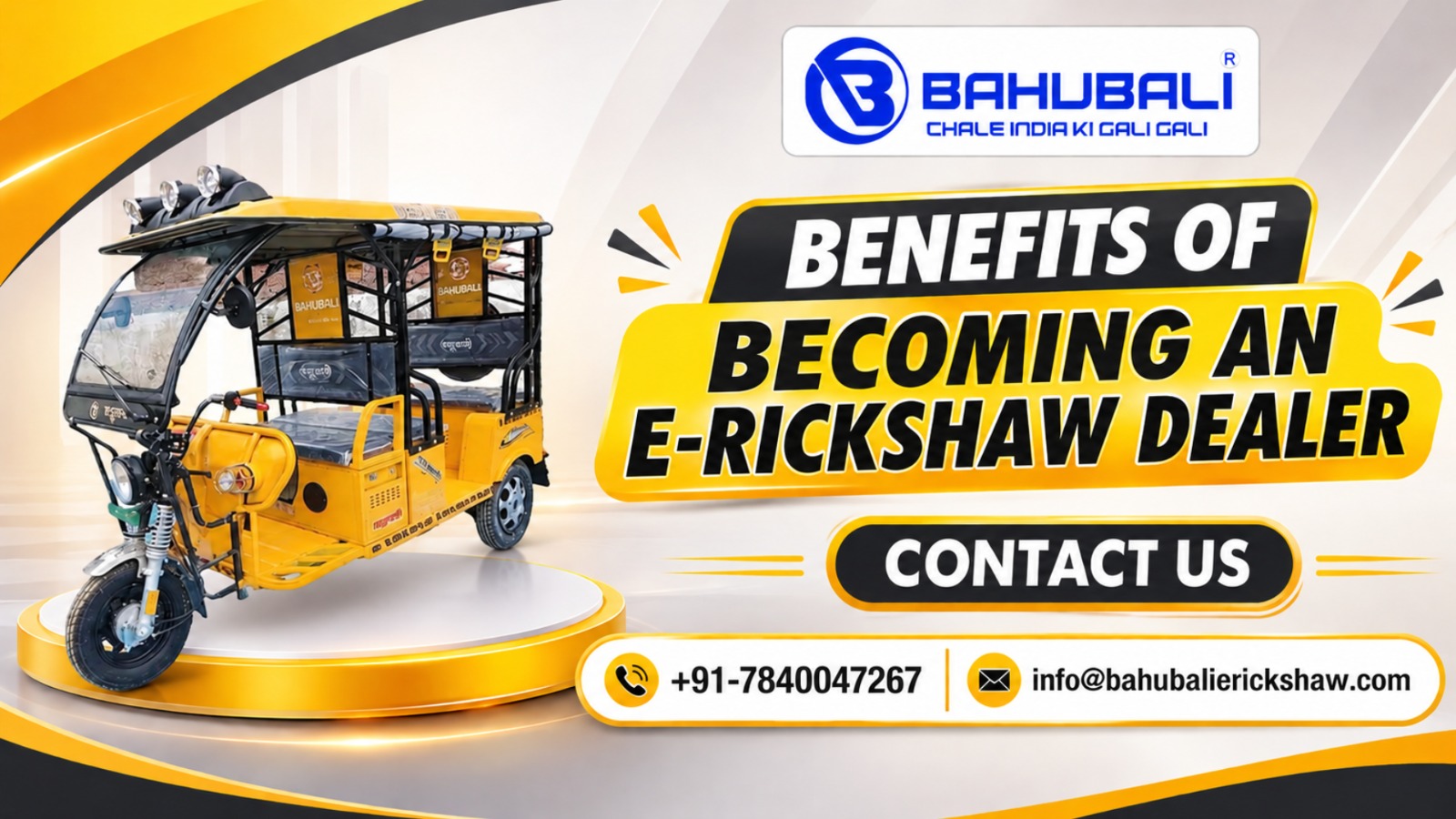
Benefits of Becoming an E-rickshaw Dealer
Introduction
Becoming an E-rickshaw Dealer offers an opportunity to enter India's electric three-wheeler industry with passenger transportation, goods delivery and commercial vehicle sales. The business includes not only vehicle sales but also spare parts, maintenance, fleet orders and customer support. However, building a successful dealership requires more than identifying market demand. Entrepreneurs must understand vehicle categories, dealership investment, profit calculations, inventory management and manufacturer support. This guide explains these opportunities and how interested entrepreneurs can consider a dealership with Bahubali E Rickshaw.
Why Is India's Electric Three-Wheeler Market Creating Dealership Opportunities?
India has become an important market for electric three-wheelers because of their role in local passenger transportation and commercial goods delivery.
According to the International Energy Agency's Global EV Outlook 2026, India remained the world's largest electric three-wheeler market in 2025, with more than two-thirds of three-wheelers sold being electric.
JMK Research's FY2026 report also recorded approximately 19% year-on-year growth in registered passenger and cargo electric three-wheeler sales.
This market creates opportunities for an E-rickshaw Dealer to offer different customer requirements. However, demand varies between cities, smaller towns and commercial markets. Studying local vehicle registrations, existing dealerships, customer enquiries and transportation needs can help identify a suitable business location.
What Are the Main Benefits of Becoming an E-rickshaw Dealer?
1. Access to Different Customer Groups
An electric rickshaw dealership can offer individual drivers, small business owners, retailers, wholesalers and fleet operators.
Their purchasing requirements are different. Passenger vehicle buyers can prioritise seating capacity, battery options and daily running requirements. Commercial customers can focus on payload, loading space and vehicle durability.
Understanding these differences helps an E-rickshaw Dealer develop a customer base across multiple transportation uses.
2. Opportunities in Passenger and Cargo Vehicle Sales
Passenger e-rickshaws and electric loaders address different market requirements.
-
Passenger vehicles: Used for local commuting, connecting people to nearby transport services and short-distance passenger journeys.
-
Electric loaders: Used by retailers, wholesalers and small businesses for local goods transportation.
-
Commercial electric three-wheelers: Serve businesses requiring vehicles for regular distribution and delivery activities.
A dealer can select suitable vehicle categories according to local demand. This creates opportunities to offer both individual buyers and commercial customers without depending entirely on one product segment.
3. Additional Income from Spare Parts and Maintenance
The dealership business can generate revenue beyond the initial vehicle transaction.
Potential activities include spare parts sales, replacement components, accessories, routine servicing and paid repair work. Customers can also require assistance with battery-related issues, chargers, electrical components and warranty claims.
An E-rickshaw Dealer with suitable technical facilities and genuine replacement parts can develop repeat customer business.
That is why service revenue depends on actual demand, labour costs, component availability and the dealership's service arrangements.
4. Opportunities to Supply Fleet and Business Customers
Local delivery companies, wholesalers and transport operators may require multiple electric vehicles for their operations.
Instead of depending only on individual enquiries, dealers can develop relationships with businesses that need passenger or cargo vehicles regularly.
Bulk orders can increase sales volume but they also require sufficient inventory, working capital, delivery planning and payment management.
5. Scope for Distribution and Market Expansion
Once the initial dealership becomes stable, entrepreneurs can explore nearby locations, additional product categories and commercial supply opportunities.
An E-rickshaw Dealer can develop a wider customer network through local business relationships, product demonstrations and customer referrals.
Business growth should be based on sales performance and available resources rather than increasing inventory without confirmed demand.
How Does an E-rickshaw Dealership Make Money?
The main revenue source is the margin between the vehicle's purchase cost and selling price. Additional income can come from spare parts, accessories and maintenance services.
Understanding the difference between gross margin and net profit is essential.
Gross vehicle margin = Selling price − Total vehicle purchase cost.
Net profit = Total business income − All applicable business expenses.
Expenses can include showroom rent, employee salaries, transportation, marketing, financing costs, taxes and other operating expenses.
Inventory turnover is equally important. If vehicles remain unsold for extended periods, working capital becomes blocked. So, an E-rickshaw Dealer should monitor enquiries, monthly sales, popular models and stock movement.
There is no universal dealership profit margin. Actual earnings depend on manufacturer pricing, commercial terms, local competition and sales volume.
What Investment Is Required to Start an E-rickshaw Dealership?
The investment depends on the dealership format, showroom location, initial vehicle stock and manufacturer requirements.
Before starting, calculate:
-
Showroom rent, security deposit and basic setup.
-
Initial vehicle inventory and transportation costs.
-
Working capital for daily business operations.
-
Employee salaries and marketing expenses.
-
Spare parts and basic service parts.
A retail showroom and a larger distribution operation will have different financial requirements. An E-rickshaw Dealer should request a written investment estimate and commercial proposal from Bahubali E Rickshaw before committing funds.
What Challenges Should a New Dealer Prepare For?
Dealership profitability can be affected by price competition, unsold inventory, delayed customer payments, spare parts shortages and warranty-related complaints.
Vehicle specifications also require careful communication. Driving range can change according to payload, battery condition, road conditions and driving habits. Dealers should provide verified specifications rather than unrealistic performance promises.
Proper inventory planning, transparent pricing and an organised after-sales process can help manage these challenges.
How to Start an Authorised Dealership with Bahubali E Rickshaw?
Entrepreneurs interested in a Bahubali E Rickshaw dealership should begin by discussing the available business opportunities and manufacturer requirements directly with the company.
Before signing an agreement, clarify:
-
Available passenger and loader models.
-
Dealer purchase prices and payment conditions.
-
Minimum order quantities and stock requirements.
-
Warranty coverage and claim procedures.
-
Spare parts supply and technical assistance.
-
Territory arrangements and dealership obligations.
-
Marketing support and dealer training, if provided.
Also verify vehicle approvals, registration eligibility and applicable documentation.
Government incentives should not be treated as guaranteed selling benefits. The PM E-DRIVE scheme has separate provisions for eligible electric three-wheelers and dealers should check current official notifications and vehicle eligibility before discussing incentives with customers.
Conclusion
Becoming an E-rickshaw Dealer offers opportunities in passenger transportation, commercial goods delivery, spare parts and vehicle servicing. India's electric three-wheeler market provides a strong commercial context, but successful dealership operations need careful financial planning and an understanding of local customer requirements. Entrepreneurs should compare vehicle quality, manufacturer terms, inventory costs and after-sales arrangements before investing. For those considering Bahubali E Rickshaw, understanding the available products and dealership conditions is the first step towards building a well-planned electric vehicle business in India.
Frequently Asked Questions
Q1. Is becoming an E-rickshaw Dealer profitable in India?
Yes, it can be profitable when there is good local demand, proper stock management, suitable vehicle pricing and reliable after-sales service.
Q2. How much investment is required to start an E-rickshaw dealership?
Investment depends on showroom rent, vehicle stock, location, staff, spare parts and working capital.
Q3. What are the requirements to become an authorised E-rickshaw Dealer?
Requirements may include business registration, suitable showroom space, investment capacity and an agreement with the manufacturer.
Q4. Can an E-rickshaw Dealer sell both passenger and loader vehicles?
Yes, dealers can offer passenger e-rickshaws and electric loader vehicles, depending on the manufacturer's available models and dealership terms.
Q5. How can I start an E-rickshaw dealership with Bahubali E Rickshaw?
Contact Bahubali E Rickshaw to discuss available models, dealership requirements, investment, payment terms and manufacturer support.

 Call Now ! +91-7840047267
 Email Now info@bahubalierickshaw.com