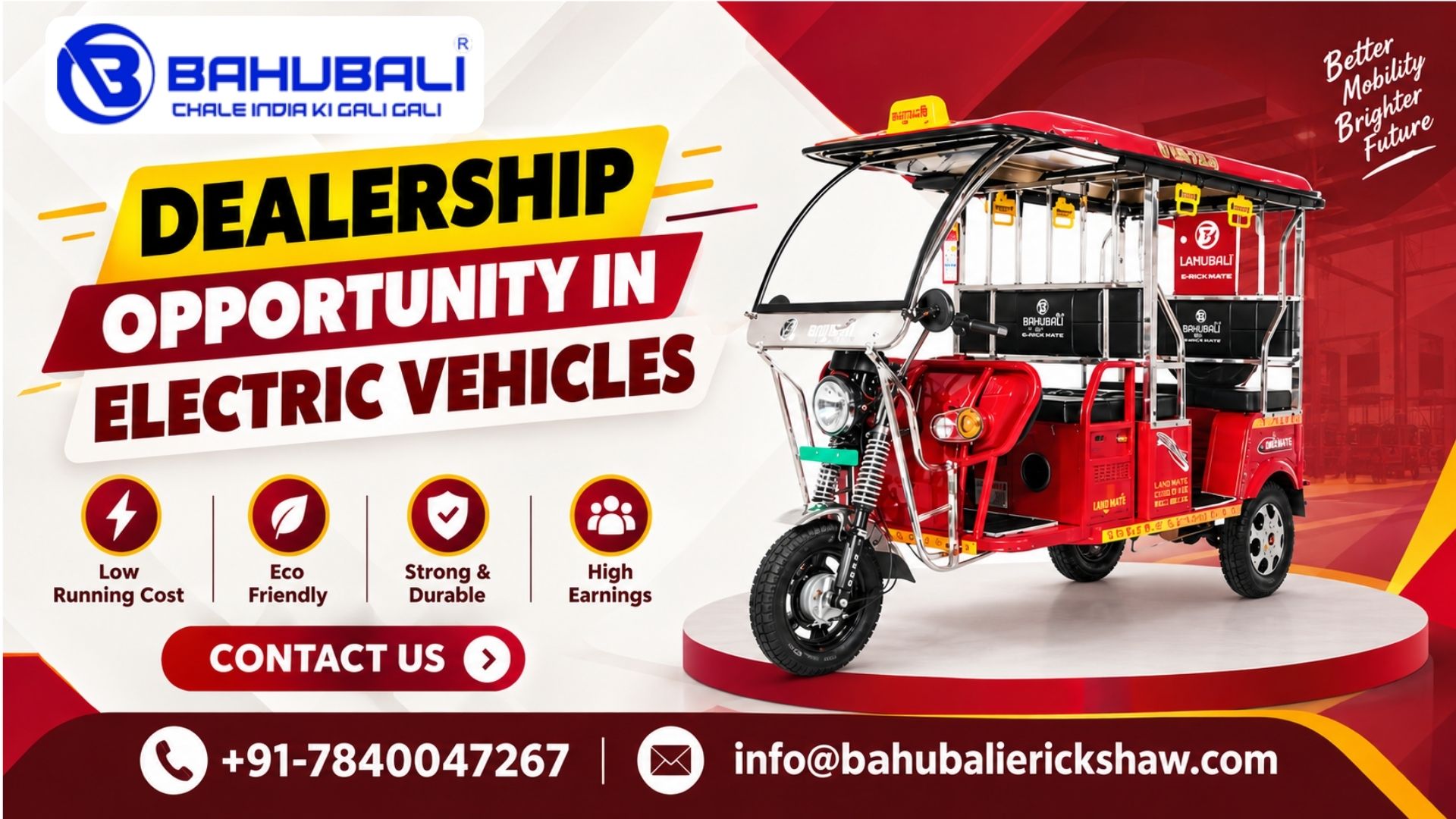
Dealership Opportunity in Electric Vehicles
Introduction
A dealership opportunity in electric vehicles allows people to start a business by selling electric scooters, e-rickshaws, electric cars, or electric loaders. In India, this business can help meet the needs of people looking for vehicles for daily travel, passenger services and goods delivery. That is why starting an EV dealership requires careful planning. You need to choose the right type of vehicle, understand local demand, calculate your budget and find a company that provides good support.
Why Consider a Dealership Opportunity in Electric Vehicles?
Electric vehicles are used for daily travel, passenger transport, goods delivery and small businesses. Before buying one, customers often compare its price, battery life, charging time, running costs and maintenance needs.
A dealership opportunity in electric vehicles allows business owners to offer different types of customers:
-
Commercial drivers: People who use e-rickshaws to carry passengers or goods.
-
Small business owners: Shopkeepers and traders who need vehicles to move their products.
-
Delivery businesses: Companies that need vehicles to deliver goods to customers.
-
Individual buyers: People looking for electric vehicles for personal use.
Instead of selling every type of electric vehicle, new dealers should focus on the vehicles that people need most in their area.
Which Type of EV Dealership Should You Choose?
The right dealership opportunity in electric vehicles depends on your budget, available space, nearby competitors and local customer needs.
Electric Three-Wheeler Dealership
Electric three-wheelers can be used to carry passengers or transport goods. This business may suit people who want to sell vehicles to drivers, shopkeepers, wholesalers and local delivery businesses.
Depending on the company, you may be able to sell passenger e-rickshaws, electric loaders and other three-wheelers. Before choosing a model, check its price, carrying capacity, battery details and service support.
Electric Two-Wheeler Dealership
Electric scooters and motorcycles target personal commuters, students and delivery riders. Dealers need to understand customer preferences, battery options, service arrangements and competition from established brands.
Electric Commercial Vehicle Dealership
Electric goods vehicles can be useful for shopkeepers, delivery businesses and transport companies. Customers usually check how much weight a vehicle can carry, how far it can travel on one charge, how long charging takes and how easily it can be repaired.
Practical tip: Choose a segment after speaking with potential customers and checking which vehicles are already selling in your area.
How Much Money Do You Need to Start an EV Dealership?
The cost of starting an electric vehicle dealership depends on the company, showroom size, number of vehicles and services you plan to offer. Every dealership has different costs, so there is no fixed investment amount for all businesses.
Before starting, make a budget that includes:
-
Dealership fees: Check whether the company charges a joining fee or security deposit.
-
Showroom and storage: Include shop rent, signboards, electrical work and space for vehicles.
-
Initial stock: Find out how many vehicles you must buy to get started.
-
Staff expenses: Plan for sales staff, paperwork and daily business work.
-
Marketing: Allocate funds for local promotions, digital campaigns and lead generation.
-
Repair and service support: Budget for tools, spare parts, staff training and warranty-related work.
-
Extra money for daily expenses: Keep some money aside for rent, salaries, bills and unexpected costs.
Ask the company for a written price list and complete details about its dealership opportunity in electric vehicles. Estimate your monthly expenses and expected sales before investing your savings or taking a loan.
How to Apply for an EV Dealership in India
Starting a dealership becomes easier when you follow a structured process. Researching a dealership opportunity in electric vehicles can help you understand the requirements before making a financial commitment.
1. Check Demand in Your Area
Find out which electric vehicles people want to buy. Visit nearby dealerships, compare vehicle prices and talk to drivers and business owners. Also, check whether customers can easily get spare parts and repair services.
2. Compare Different Companies
Look at different manufacturers before making a decision. Compare vehicle prices, product quality, spare parts, warranty terms, dealer earnings and delivery times. Do not select a brand based only on its advertised earning potential.
3. Contact the Company
Ask the company whether it is accepting dealership applications in your city or district. Get details about the starting cost, required documents, available models and other conditions. These details will help you assess whether the dealership opportunity in electric vehicles suits your budget and business plans.
4. Read the Dealership Agreement
Read the agreement carefully before making any payment. Check the payment terms, sales targets, warranty rules, product returns and conditions for ending the agreement. Request the application process, investment details, territory conditions and eligibility criteria.
5. Set Up Your Business
Arrange your shop, business documents, staff, vehicles and customer service facilities. Check which business registrations, tax documents and vehicle-related approvals you need before starting.
Is Bahubali E Rickshaw a Dealership Option?
People interested in selling electric three-wheelers can contact Bahubali E Rickshaw to ask about possible dealership opportunities. Those exploring a dealership opportunity in electric vehicles can discuss the company's available models and business requirements directly.
Before joining, ask the company about the following:
-
Which passenger e-rickshaws and electric loaders are available?
-
Is a dealership available in your city or district?
-
How much money is needed to get started?
-
How many vehicles must you buy initially?
-
What profit margin can dealers expect?
-
What warranty and spare-parts support does the company provide?
-
Does the company help with advertising, sales and repairs?
Confirm these details directly with the company because dealership terms and availability may change. Read the complete offer and agreement before investing your money.
How Can an EV Dealer Get More Customers?
Success in an electric vehicle dealership depends on attracting a steady flow of customers. A good showroom helps, but people must also be able to find your business and learn about the vehicles you sell.
Here are some simple ways to attract more customers:
-
Create a Google Business Profile with your correct address and phone number.
-
Build a simple website showing vehicle models, prices, features and contact details.
-
Write helpful blogs about electric three-wheeler prices, battery life, carrying capacity and maintenance.
-
Use WhatsApp to answer questions and share correct product information.
-
Build relationships with drivers, local traders, fleet operators and delivery businesses.
-
Offer clear explanations of financing availability, warranty terms and service arrangements.
Responding quickly and explaining vehicle limitations honestly can help build customer trust and encourage referrals. Before investing in a dealership opportunity in electric vehicles, also consider how you will reach potential buyers and provide support after each sale.
Conclusion
A dealership opportunity in electric vehicles can provide an entry point into India's electric mobility market, but the right choice requires careful research. Compare manufacturers, calculate the complete investment, assess local demand and verify service support before signing an agreement. If you are considering Bahubali E Rickshaw, request its current dealership terms and available models directly. A realistic business plan and reliable customer support will provide a stronger foundation than promotional promises alone.
Frequently Asked Questions
Q1. Is a dealership opportunity in electric vehicles profitable in India?
It can be profitable, but earnings depend on sales volume, dealer margins, operating expenses, competition and after-sales costs. Calculate the expected profit per vehicle and monthly break-even sales before investing.
Q2. Can I start an electric vehicle dealership with a small budget?
Possibly. Some manufacturers may offer smaller dealership formats or distribution options in the electric vehicle sector, but availability varies. Ask about minimum inventory, premises, deposits and alternative business models before deciding whether a dealership opportunity in electric vehicles fits your budget.
Q3. Which electric vehicle dealership is suitable for beginners?
An entrepreneur should consider a segment with identifiable local demand, manageable inventory costs, accessible spare parts and dependable technical support. Electric three-wheelers may be worth evaluating in markets with strong passenger or goods-transport needs.
Q4. What documents are required for an EV dealership?
Requirements depend on the manufacturer, business structure and applicable laws. Commonly requested documents may include identity and address proof, PAN, business registration details where applicable, premises documents and banking information.

 Call Now ! +91-7840047267
 Email Now info@bahubalierickshaw.com