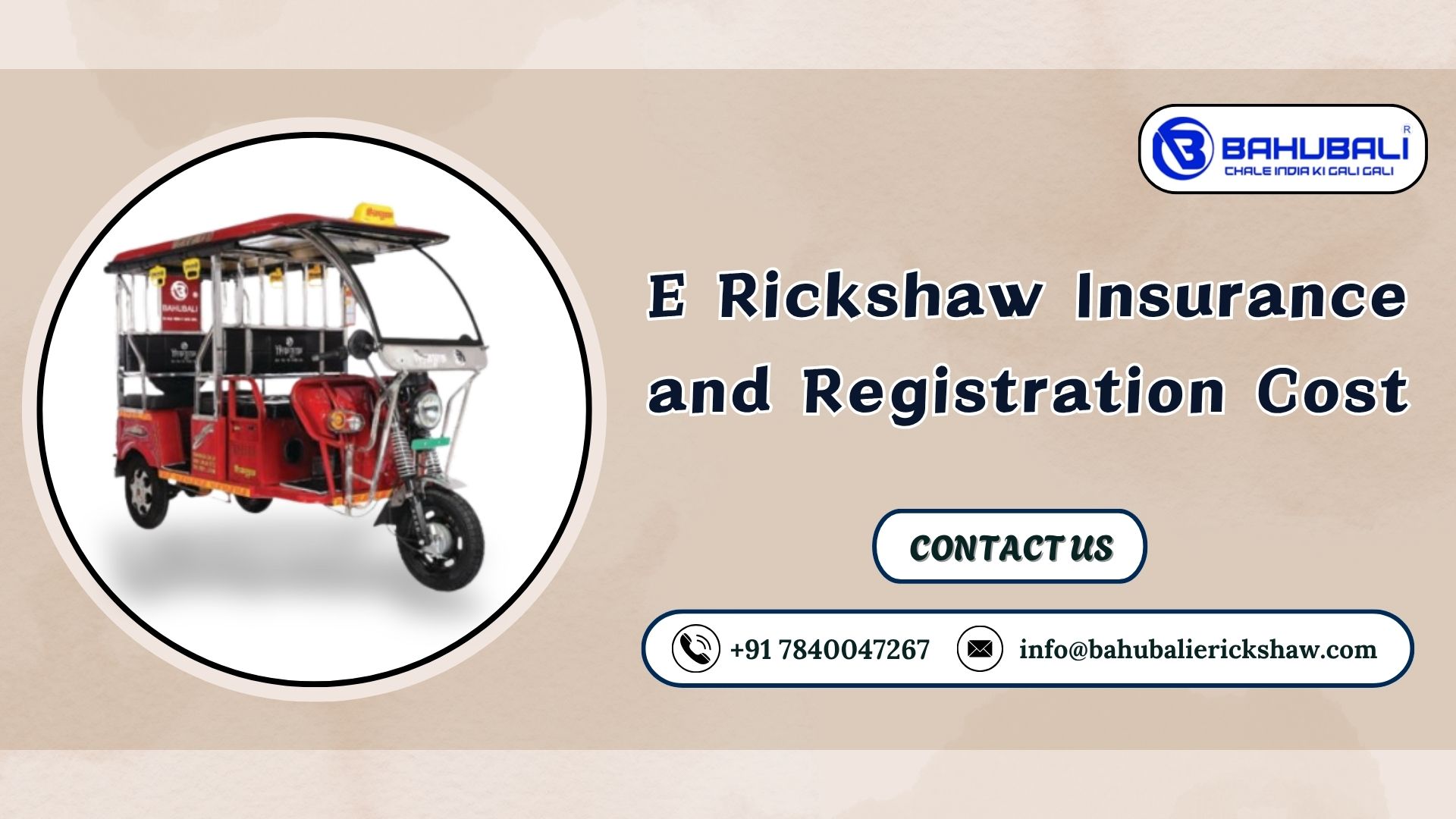
E Rickshaw Insurance and Registration Cost
Introduction
One of the most important things that every customer should be aware of before starting an electric rickshaw business in India is the E Rickshaw Insurance and Registration Cost. Understanding insurance coverage, registration costs, licenses and legal requirements can help you avoid future financial issues, whether you are buying one vehicle for personal use or running a business franchise.
Understanding E-Rickshaw Registration Requirements
Indian transport laws need vehicle registration before driving any electronic rickshaw on public roadways. The public transport authority, the category of vehicle and whether the vehicle is being bought for personal or business use all affect the cost of E Rickshaw Insurance and Registration Cost. The majority of states want a license plate number, permit verification, safety approval and registration certificate.
Usually, the Regional Transport Office (RTO) is where the registration procedure begins. Documents include an Aadhaar card, proof of address, invoice, battery information and vehicle frame details should be submitted by owners. Depending on local regulations and taxes, registration fees usually range from ₹3,000 to ₹8,000. Also, some states could offer green car benefits that reduce the total cost of registration.
Importance of Insurance for E-Rickshaws
Road accidents, battery damage, theft, passenger injuries and natural disasters are a few of the regular operational dangers that commercial electric vehicles have to deal with. For this reason, while calculating the overall investment, E Rickshaw Insurance and Registration Cost should always be planned together. Insurance guarantees conformance to legal standards and protects drivers from unexpected financial losses.
In India, third-party insurance is required, but for more security, many operators also choose full insurance plans. Battery replacement, accidental repairs, personal accident insurance and fire or flood damage can all be covered by full coverage. Because e-rickshaws run at slower speeds than bigger industrial vehicles, insurance premiums are usually more reasonable.
Average Insurance Cost in India
The insurance company, city, car model and battery type can all affect the total E Rickshaw Insurance and Registration Cost. Third-party insurance for an e-rickshaw usually costs between ₹4,000 and ₹7,000 a year. Depending on the guaranteed amount and even more additional features, a complete plan can cost anywhere from ₹8,000 to ₹15,000.
Fleet owners often bargain for lower insurance for many vehicles. Before choosing a policy, buyers should consider claim payout amounts, roadside support, battery protection coverage and service network availability. Because it reduces downtime for daily profits, Bahubali E Rickshaw customers often choose insurers that provide fast claim processing and lowest cost maintenance support.
Factors That Affect Overall Ownership Cost
Many new buyers ignore other costs instead of focusing only on the vehicle's price. However, a large amount of the total ownership expenses goes into E Rickshaw Insurance and Registration. The future of profitability can be impacted by factors like state taxes, permit requirements, battery warranties, charging infrastructure and financing terms.
While the cost of changing batteries can result in much higher insurance premiums for vehicles using lithium-ion batteries, these vehicles often have a longer life cycle and more effective performance. When calculating out monthly expenses for operation, drivers need also take annual maintenance, tyre replacement and battery charging costs into account. Selecting a reputable brand such as Bahubali E Rickshaw can increase long term profit and reduce the rate of repairs.
Government Policies and Subsidies
Green transport regulations and subsidy schemes have given India's electric vehicle sector huge support. State-level tax breaks or registration discounts can reduce the E Rickshaw Insurance and Registration Cost in some areas. Small company owners can manage to enter the electric transport sector with a smaller investment thanks to government schemes that support environmentally friendly transport.
Attractive financing choices for electric commercial vehicles are offered by a number of banks and NBFCs. Drivers from small towns and cities can now purchase electric vehicles more easily thanks to low financing rates and flexible payback plans. Before buying a vehicle, buyers should review the regulations given out by the local transport authority to find out whether they are eligible for subsidies.
Why Choosing the Right Brand Matters
Insurance claims, maintenance costs and operational dependability are all directly impacted by vehicle quality. For this reason, analysing a manufacturer's after-sales service support and spare parts availability should be part of understanding E Rickshaw Insurance and Registration Cost. Reputable brands usually offer easier access to authorised service centers and better warranty assistance.
Tips to Reduce Expenses Legally
E Rickshaw Insurance and Registration Cost can be better managed by buyers with careful planning. Owners of vehicles should keep accurate service records, maintain coverage on schedule and avoid making unauthorized modifications that can have an impact on policy claims. Also, safe driving methods improve future savings and lower accident-related costs.
Practical methods to keep costs under control include buying vehicles from reputable brands, choosing correct optional features and comparing insurance companies online. Also, buyers should confirm whether the dealer helps with permit applications and registration papers, as this can reduce processing costs and save time.
Final Thoughts
Understanding E Rickshaw Insurance and Registration Cost is important for anyone planning to start an electric transport business in order to make smart financial decisions. The complete ownership experience can be affected by registration fees, insurance rates, maintenance costs and policy coverage. Customers can increase profit and simplify operations by carefully reviewing brands and choosing reliable manufacturers.

 Call Now ! +91-7840047267
 Email Now info@bahubalierickshaw.com