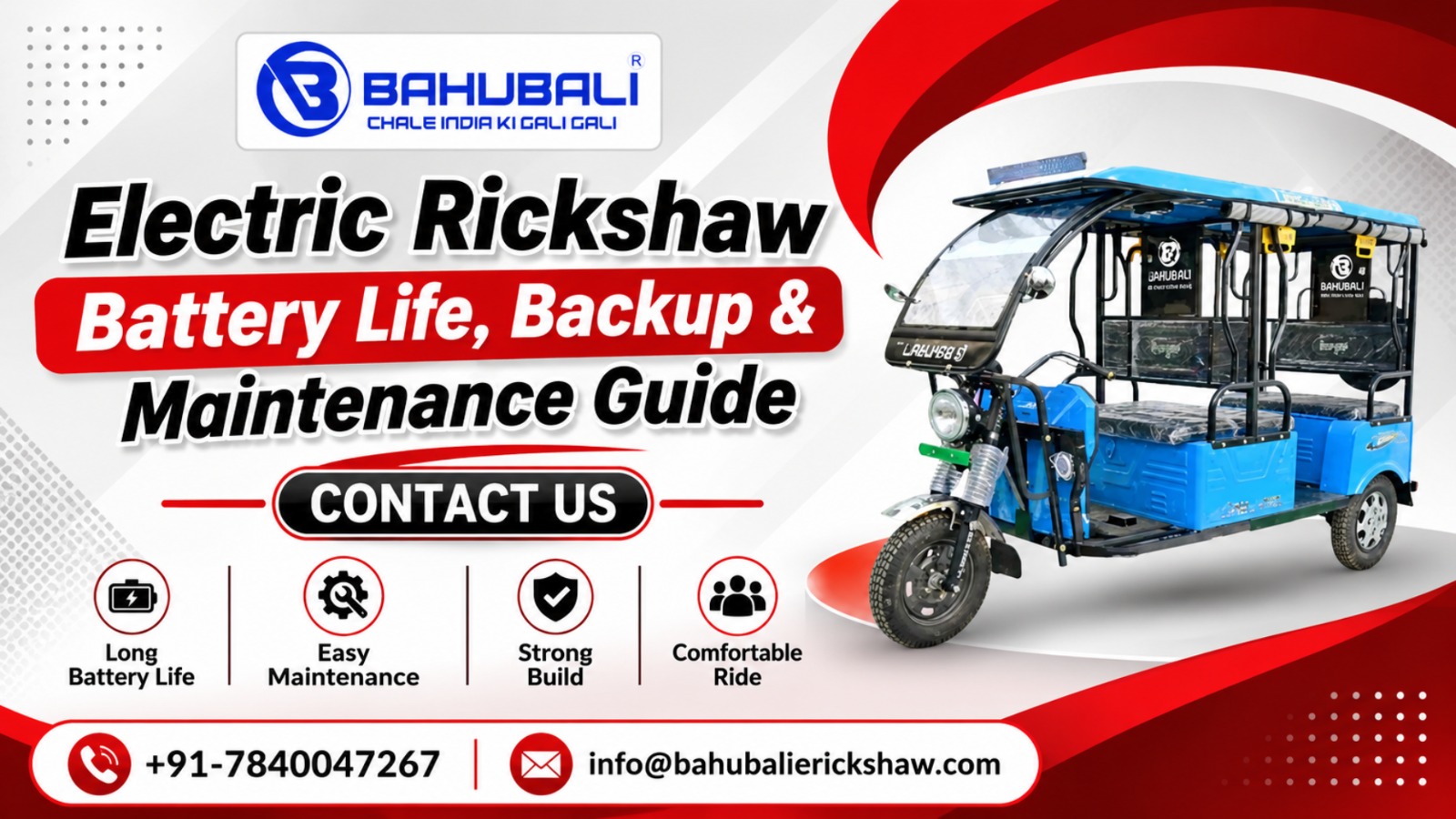
Electric Rickshaw Battery Life, Backup & Maintenance Guide
Introduction
Electric rickshaw performance, daily running costs and driving range completely depend on its battery which makes electric rickshaw battery life an important thing for every buyer. Knowing how to maintain an e-rickshaw battery properly helps its owners to improve battery backup, manage charging time, reduce unexpected downtime and get better value from their investment.
Generally, battery performance depends on battery type, capacity, driving conditions, charging habits and regular servicing. A well-maintained battery can deliver more steady backup for all the years it functions. For people who are thinking about purchasing a battery rickshaw, understanding these factors is just as important as checking the price of vehicle or motor specifications.
What Is the Average Electric Rickshaw Battery Life?
The average electric rickshaw battery life depends on the type of battery installed. Lead-acid batteries commonly require replacement earlier than properly managed lithium-ion batteries. The actual lifespan varies by manufacturer, battery quality, usage and operating conditions.
Many factors influence battery durability:
-
Battery chemistry and manufacturing quality.
-
Daily kilometres travelled and passenger load.
-
Frequency of charging and discharging.
-
Effect of extreme temperatures.
-
Quality of the charger and electrical connections.
-
Regular inspection and maintenance.
Owners should check the manufacturer's warranty and suggested battery replacement schedule rather than depending on a fixed year of its functioning.
How Much Electric Rickshaw Battery Backup Can You Expect?
Electric rickshaw battery backup refers to the distance a vehicle can travel after a full charge. It is affected by battery capacity, vehicle weight, road conditions, driving speed and passenger load.
For example: E-rickshaw travelling on smooth roads with moderate passenger weight can achieve better range than one regularly travelling on uphill roads or carrying maximum loads.
Drivers who travel longer distances every day can consider a Long Range Electric Rickshaw and check its battery capacity, driving range and charging time to find the right option for their daily needs.
To improve daily backup:
-
Maintain steady driving speeds.
-
Avoid unnecessary speed and sudden braking.
-
Keep tyres properly maintained.
-
Avoid carrying loads beyond the recommended capacity.
-
Plan routes to reduce unnecessary distance.
-
Charge the battery according to manufacturer instructions.
Remember that advertised range and actual operating range can be different. Always check performance under your regular working conditions.
E-Rickshaw Battery Maintenance: Essential Practices
E-rickshaw battery maintenance plays a major role in protecting battery performance. Small maintenance mistakes can gradually reduce capacity and increase charging requirements.
1. Follow Proper Charging Habits
Use the charger recommended by the vehicle manufacturer and avoid using incompatible chargers because incorrect charging parameters can damage the battery.
Do not leave the charging part connected unnecessarily and follow the battery manufacturer's instructions regarding charging completion and disconnection.
2. Keep Battery Connections Clean
Regularly check battery connection points, and wires to make sure they are clean, secure and working properly. Loose connections can cause heating, power interruptions and less effective electrical performance.
For lead-acid batteries, check electrolyte levels only if the battery design requires maintenance. Use the specified Clean water and follow professional servicing instructions. Never open sealed batteries.
3. Protect the Battery From Extreme Temperatures
Excessive heat can accelerate battery damage, while very low temperatures can temporarily affect available capacity.
Park the vehicle in an open location whenever possible and keep the Battery area clean and dry.
4. Schedule Regular Testing
Ask a qualified technician to test battery voltage, charging performance, wiring and connectors. Early identification of problems can reduce more expensive repairs.
How to Increase Electric Rickshaw Battery Life?
If you want to improve electric rickshaw battery life, focus on consistent driving and correct charging practices rather than depending on quick fixes.
Here are practical recommendations:
-
Avoid repeatedly overloading the vehicle.
-
Follow the recommended charging cycle.
-
Do not ignore unusual battery heating.
-
Check tire pressure frequently.
-
Avoid deep discharging unless permitted by the manufacturer.
-
Use genuine electrical components.
-
Get battery performance tested timely.
These habits can help maintain usable capacity and reduce unnecessary extra battery workload.
Electric Rickshaw Charging Time: What Should Owners Know?
Electric rickshaw charging time depends on battery capacity, charger output, battery chemistry and remaining charge.
A larger battery generally requires more charging energy that is why charging duration cannot be decided by only capacity because charger performance and battery-management systems also influence the process.
Before purchasing a vehicle, ask about:
-
Recommended charging duration.
-
Compatible charger specifications.
-
Electricity consumption per full charge.
-
Charging safety instructions.
-
Battery warranty and replacement conditions.
These details help owners estimate daily operating expenses more accurately.
What Factors Affect the E-Rickshaw Battery Price?
The rickshaw battery price changes according to battery technology, capacity, brand, warranty and compatibility. Lead-acid and lithium-ion batteries have different purchase costs, maintenance requirements and expected service lives.
Similarly, the e rickshaw battery price should not be checked separately from its usable capacity and warranty coverage.
When comparing the battery rickshaw price, consider the complete ownership cost rather than selecting the cheapest available option.
Buyers researching e rickshaw price or Electric rickshaw price should also compare battery specifications, motor performance, charging arrangements and after-sales support.
For accurate pricing, Contact Bahubali E Rickshaw manufacturer or authorised dealer for the latest quotation.
How Does Battery Quality Influence Vehicle Selection?
Choosing the right battery operated auto rickshaw or battery e rickshaw requires checking its battery capacity, motor specifications and overall performance to ensure it meets your daily travel and business needs.
Before purchasing, verify battery capacity, voltage, chemistry, charger suitability and warranty terms. Also ask about the availability of replacement batteries and authorised service facilities.
At Bahubali E Rickshaw, new buyers can use these specifications as a practical checklist when comparing suitable electric mobility options.
Understanding E-rickshaw battery lifespan also helps owners calculate replacement expenses and plan long-term vehicle usage.
Conclusion
Understanding electric rickshaw battery life helps owners to manage operating costs, plan replacements and improve vehicle reliability. Maintaining battery performance requires correct charging, responsible driving and regular inspection.
Before purchasing a new vehicle or replacement battery, compare technical specifications, warranty coverage and servicing support. With informed decisions and consistent maintenance, electric rickshaw owners can make better use of their vehicles and protect their long-term investment. Bahubali E Rickshaw supports buyers to consider battery performance alongside overall vehicle requirements when making their purchasing decisions.
Frequently Asked Questions
1. How long does an electric rickshaw battery last?
Battery lifespan depends on chemistry, manufacturing quality, usage and maintenance. Follow the manufacturer's replacement recommendations and warranty conditions.
2. How can I improve electric rickshaw battery backup?
Maintain tyre pressure, avoid overloading, drive smoothly and follow recommended charging practices. Regular battery inspections also help identify performance problems.
3. Does daily charging damage an e-rickshaw battery?
Not necessarily. Daily charging is generally part of normal operation when performed according to the battery manufacturer's instructions.
4. When should I replace my rickshaw battery?
Consider replacement when the battery shows consistently reduced range, abnormal heating, charging problems or other signs of damage confirmed by a technician.
5. What should I check before buying a replacement battery?
Compare voltage, capacity, battery chemistry, charger compatibility, warranty and manufacturer recommendations. Do not select a battery based on only price.

 Call Now ! +91-7840047267
 Email Now info@bahubalierickshaw.com