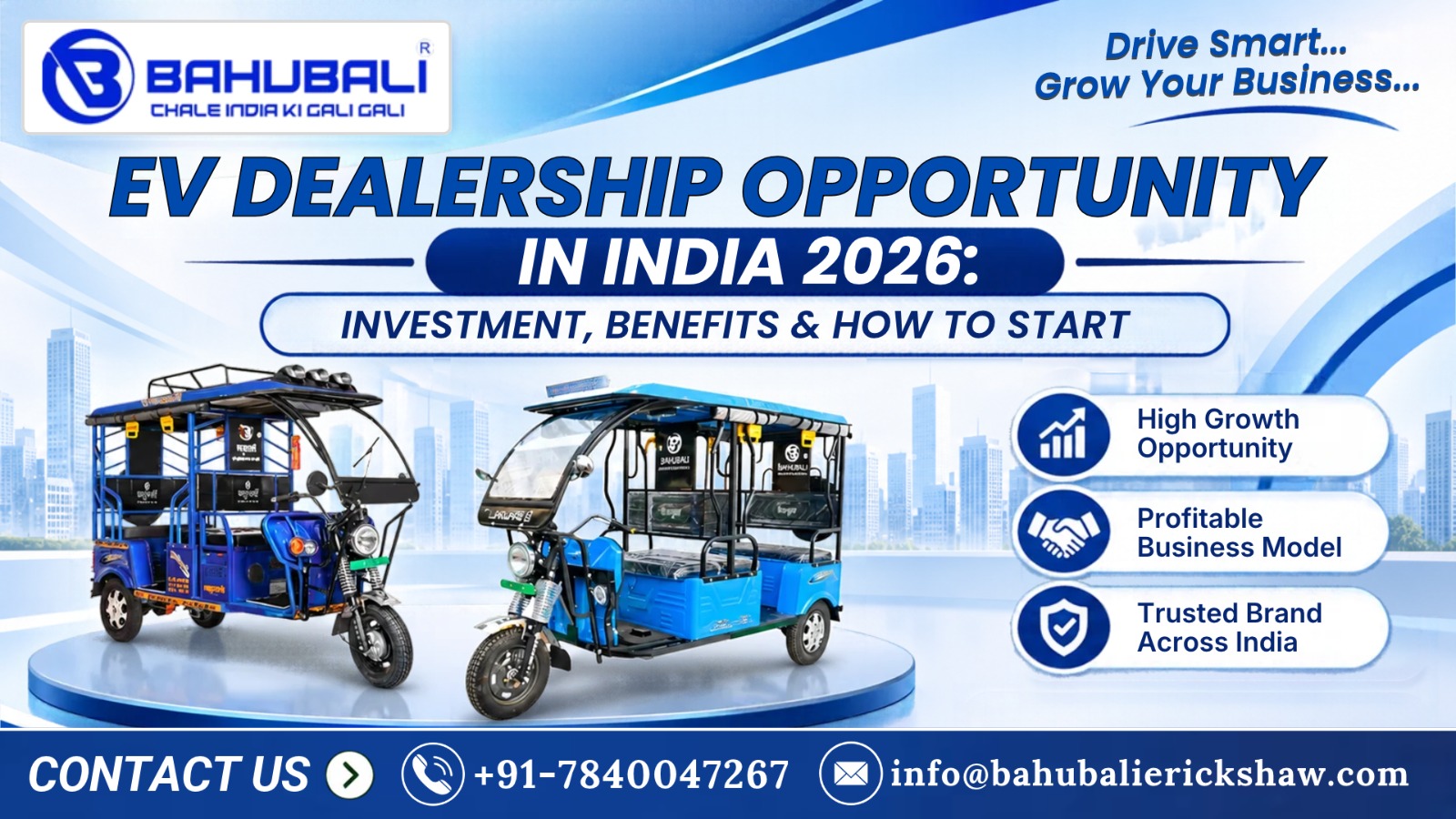
EV Dealership Opportunity in India 2026: Investment, Benefits & How to Start
Introduction
For people planning to start an automobile business, the EV Dealership Opportunity in India offers a chance to enter the growing electric vehicle market. Before starting, it is important to know which type of electric vehicle is popular in your area. Passenger e-rickshaws, electric cargo vehicles and electric two-wheelers meet different customer needs. Understanding showroom costs, vehicle stock, dealership rules and after-sales service can help new business owners make better decisions before investing in an electric vehicle dealership.
Why Is the EV Dealership Business Growing in India?
Electric vehicles are becoming an important part of India's transport industry. Their growing use is creating new business opportunities for manufacturers, dealers and service providers.
Some important reasons behind this growth include:
-
Lower running costs: Electric vehicles generally have lower charging and regular maintenance costs than similar petrol or diesel vehicles.
-
Growing demand: More people and businesses are choosing electric vehicles for daily travel and transportation.
-
Last-mile connectivity: Electric rickshaws are widely used for short-distance passenger travel and local goods delivery.
-
Growing market: Smaller cities and towns are also showing interest in electric vehicles.
According to FADA's FY2026 retail data, electric three-wheeler sales reached approximately 8.31 lakh units, showing around 19% year-on-year growth. This highlights the growing demand for electric three-wheelers in India.
Types of EV Dealership Opportunity in India
Before choosing an EV Dealership in India, understand the main types of electric vehicles.
1. Electric Two-Wheeler Dealership
Electric scooters and motorcycles are becoming popular among daily travellers, students and delivery workers. This type of business offers opportunities in the daily travel market.
2. Electric Three-Wheeler Dealership
Electric three-wheelers include passenger e-rickshaws and electric cargo vehicles. They are used for local passenger travel and goods delivery, making this a good business option for new business owners.
3. Electric Commercial Vehicle Dealership
Businesses involved in goods delivery and transport are also choosing electric commercial vehicles. Dealers can consider this type of business based on local demand and available vehicles.
How Much Investment Is Required for an EV Dealership in India?
One of the most common questions among people planning to start a business is about EV dealership costs in India.
There is no fixed investment amount because the total cost depends on the company and type of dealership. Some important expenses may include:
-
Showroom rent and decoration.
-
Buying vehicles for the showroom.
-
Business registration and required documents.
-
Staff salaries and daily business costs.
-
Spare parts and repair services.
-
Advertising and marketing.
Before investing, ask the company for a full list of costs. Also, check dealership fees, vehicle stock requirements, payment rules and other business terms.
Investment Guide for EV Dealership Opportunity in India
How to Start an EV Dealership in India?
Starting an electric vehicle dealership in India needs proper planning. Follow these simple steps to get started:
Step 1: Study Your Local Market
Find out what customers want, which other dealers are in your area and which EVs are popular. Check whether electric scooters, passenger e-rickshaws or electric cargo vehicles have more demand in your area.
Step 2: Choose a Trusted EV Company
Check vehicle quality, battery details, warranty, spare parts availability and company support before choosing a brand.
Step 3: Set Up Your Showroom
Choose a good location where customers can easily visit. Make sure you have enough space to display vehicles and talk to customers.
Step 4: Complete Your Business Documents
Depending on your business and dealership agreement, you may need identity proof, address proof, business registration papers, GST registration (if required) and local permissions.
Step 5: Provide Sales and Repair Support
Good customer service helps a dealership grow. Show customers how the vehicles work, explain their features and make sure they can get proper repair and after-sales service.
What Makes an EV Dealership Business Successful?
Starting a dealership is only the first step. Long-term success depends on vehicle quality, customer trust and good business management.
Before choosing an EV franchise opportunity in India, consider these important points:
-
Vehicle performance and build quality.
-
Battery and motor details.
-
Warranty and repair services.
-
Availability of spare parts.
-
Company training and support for dealers.
-
Local competition and customer demand.
A dealership that offers good-quality vehicles and proper after-sales service can build strong relationships with customers.
Is an EV Dealership Profitable in India in 2026?
An EV dealership can be a good business opportunity, but making a profit is not guaranteed. It depends on the number of vehicles sold, buying and selling prices, daily business costs, competition and income from after-sales services.
For people interested in an e-rickshaw dealership in India, it is important to check the local demand for affordable passenger travel and goods delivery vehicles.
Make a proper business plan, calculate your expected costs and understand the profit you can earn on each vehicle before investing your money.
Explore E-Rickshaw Dealership Opportunities with Bahubali E Rickshaw
The growing electric three-wheeler market offers a good business opportunity for people interested in the future of local transport.
Bahubali E Rickshaw welcomes enquiries from individuals and business owners who want to start an electric rickshaw business. If you are planning to become an e-rickshaw dealer, check the available vehicle models, learn about the dealership requirements and understand the business opportunities in your area.
Contact Bahubali E Rickshaw to know more about its electric three-wheeler models and dealership opportunities.
Conclusion
The EV Dealership Opportunity in India gives business owners a chance to enter the growing electric vehicle market. But choosing the right type of vehicle, knowing the investment cost and selecting a trusted company are important steps before starting. With proper market research and good customer service, new dealers can build a business that meets the transport needs of people in their area.
Frequently Asked Questions (FAQs)
Q1. How can I start an EV dealership in India?
Research your local market, select a reliable manufacturer, arrange a showroom and complete the required business documentation before starting operations.
Q2. What is the investment required for an EV dealership?
Investment depends on the brand, showroom size, vehicle inventory, location and service facilities. Contact the manufacturer for an accurate cost breakdown.
Q3. Is an electric rickshaw dealership profitable in India?
It can offer business potential in areas with strong demand for last-mile transportation. Actual profitability depends on sales volume, margins and operating expenses.
Q4. What documents are required to become an EV dealer?
Common requirements include identity proof, address proof, business registration documents, applicable GST registration and financial details. Requirements depend on the manufacturer.
Q5. How can I become a Bahubali E Rickshaw dealer?
Contact Bahubali E Rickshaw to enquire about available dealership opportunities, vehicle models, investment requirements and the application process.

 Call Now ! +91-7840047267
 Email Now info@bahubalierickshaw.com