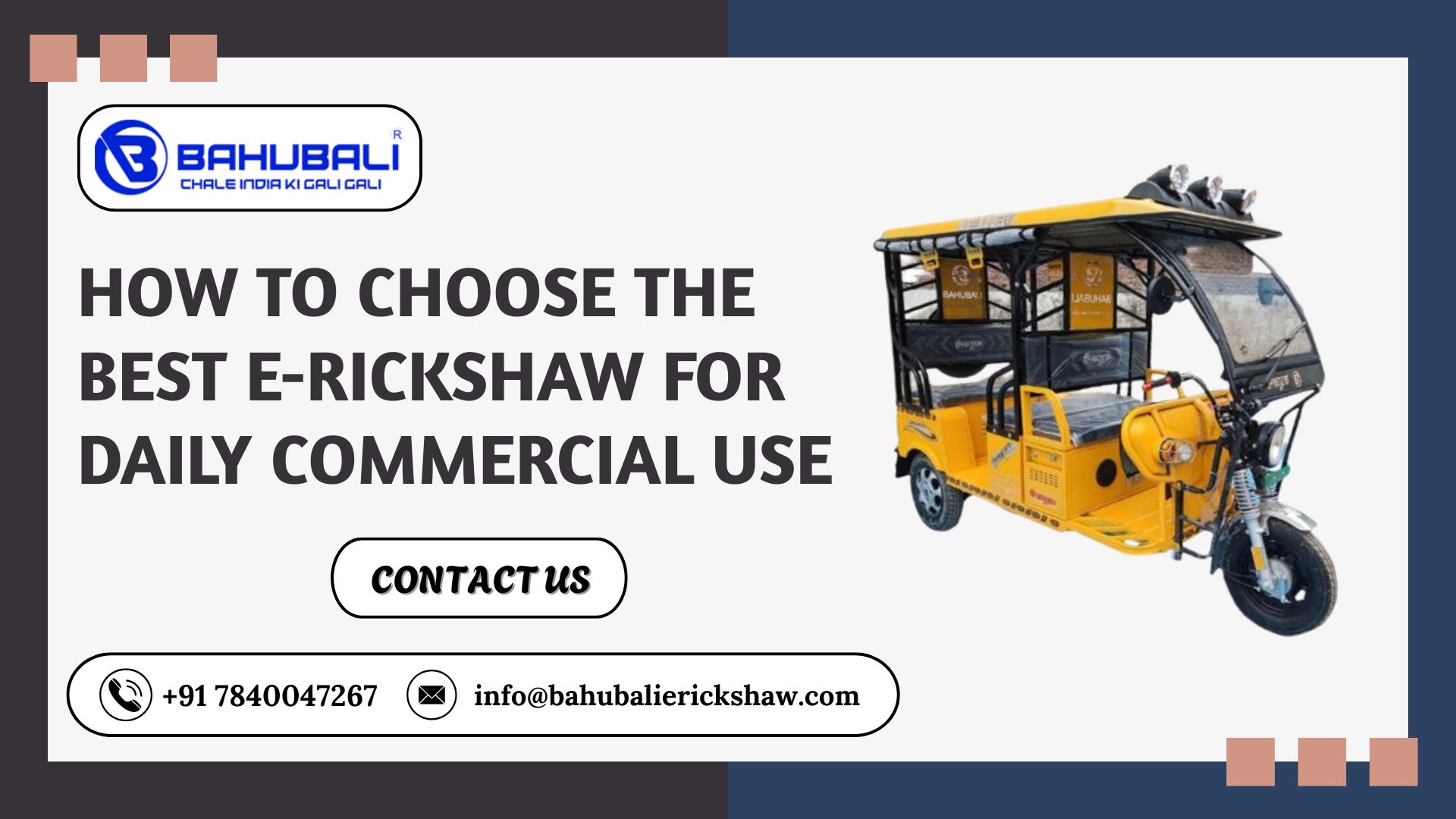
How to Choose the Best E-Rickshaw for Daily Commercial Use
Introduction
The Best E Rickshaw for Daily Business use should be chosen by looking above purchasing price. Battery suitability, motor performance, passenger capacity, frame strength, handling, charging requirements, comfort, service support and spare parts access are all factors that impact business success. The best electric rickshaw should match the driver's daily travel, road conditions, passenger load and working hours. These factors also have an impact on vehicle maintenance, performance and overall ownership costs.
What Makes the Best E Rickshaw for Daily Commercial Use?
The Best E Rickshaw is one that fulfills the user's genuine business needs. Daily distance, passenger capacity, payload, battery type, motor performance, braking, suspension and service accessibility should all be checked at the same time.
A vehicle used for regular passenger travels requires strong build and easy after sales service, not just a low purchase price.
What Should You Check Before Buying the Best E Rickshaw?
Check battery connectivity, motor performance, payload, frame design, suspension, brakes, tires, charging needs and warranty. Please confirm the availability of service centers and replacement parts.
The advertisement based range should not be seen as a guaranteed real world performance. Load, traffic, road conditions, driving style, tyre pressure, battery condition and maintenance can all affect actual range.
How Does Battery Technology Affect Daily Operation?
Battery selection should be based on daily distance, charging access, maintenance requirements and replacement accessibility. Depending on the model, Best E Rickshaw can support lead-acid or lithium-ion batteries, so check compatibility before purchasing.
For short city travels, charging comfort and service accessibility can be given priority. Long-distance commercial users can put a higher value on battery compatibility, battery life and usage.
Why Are Motor Performance and Build Quality Important?
Motor performance, controller quality, frame strength, suspension, brakes and electrical parts all have an impact on daily commercial performance. These Best E Rickshaw are often tested for repeated acceleration, many breaks, passenger loading and uneven roads.
As a result, customers should think about the whole vehicle instead of just the motors or range specifications.
What Features Should You Compare?
-
Battery: Check connectivity, charging needs and replacement availability.
-
Motor: Consider performance under normal passenger loads.
-
Payload: Match capacity to regular commercial use.
-
Chassis: Look for a design that is suitable for everyday use.
-
Suspension: Important for passenger comfort on uneven roads.
-
Brakes and tyres: Necessary for safe city driving.
-
Ground clearance: Useful on uneven roads and speed breakers.
-
Service: Check accessibility of authorised support.
-
Spare parts: Availability can reduce maintenance downtime.
-
Warranty: Understand coverage and conditions.
How Can You Choose the Best E Rickshaw?
-
Calculate daily distance based on your actual route.
-
Assess passenger and payload requirements.
-
Select suitable battery technology according to charging access.
-
Check motor and electrical components.
-
Inspect chassis, suspension, brakes and body construction.
-
Verify dealer and service support.
-
Understand warranty coverage.
-
Calculate total ownership costs.
-
Take a test drive where possible.
Why Is Total Ownership Cost Important?
The Best E Rickshaw is not always the one with the lowest price. Charging, maintenance, tires, battery replacement, spare parts and service downtime all have an impact on profits.
A vehicle with proper design, accessible service and suitable battery technology can be more practical for long-term everyday use.
Common Buying Mistakes
-
Choosing only by purchase price
-
Assuming advertised range always matches real use
-
Ignoring battery compatibility
-
Not checking service and spare-parts availability
-
Ignoring warranty terms
-
Overlooking payload requirements
-
Skipping a test drive
-
Not checking registration and documentation
Conclusion
The Best E Rickshaw must find a balance between battery connectivity, motor performance, passenger capacity, build quality, comfort, service support, warranty and ownership costs. Bahubali E Rickshaw can be compared to other effective options based on the buyer's route, load and functional needs.
FAQs
Q1. What is the Best E Rickshaw for daily use?
The Best E Rickshaw is chosen by daily distance, passenger load, battery requirements, vehicle quality and service access. Choose based on your actual commercial demands.
Q2. How do I choose the Best E Rickshaw?
Before making a purchase, check the battery, motor, payload, frame, suspension, brakes, charging requirements, warranty, spare parts and after sales support.
Q3. Which battery is suitable for an e-rickshaw?
It depends on the vehicle and the operating conditions. Check battery connectivity, charging access, maintenance requirements and replacement availability.
Q4. How important is e-rickshaw range?
Range is important, but real performance is dependent on load, traffic, road conditions, driving habits, tyre pressure and battery condition.

 Call Now ! +91-7840047267
 Email Now info@bahubalierickshaw.com